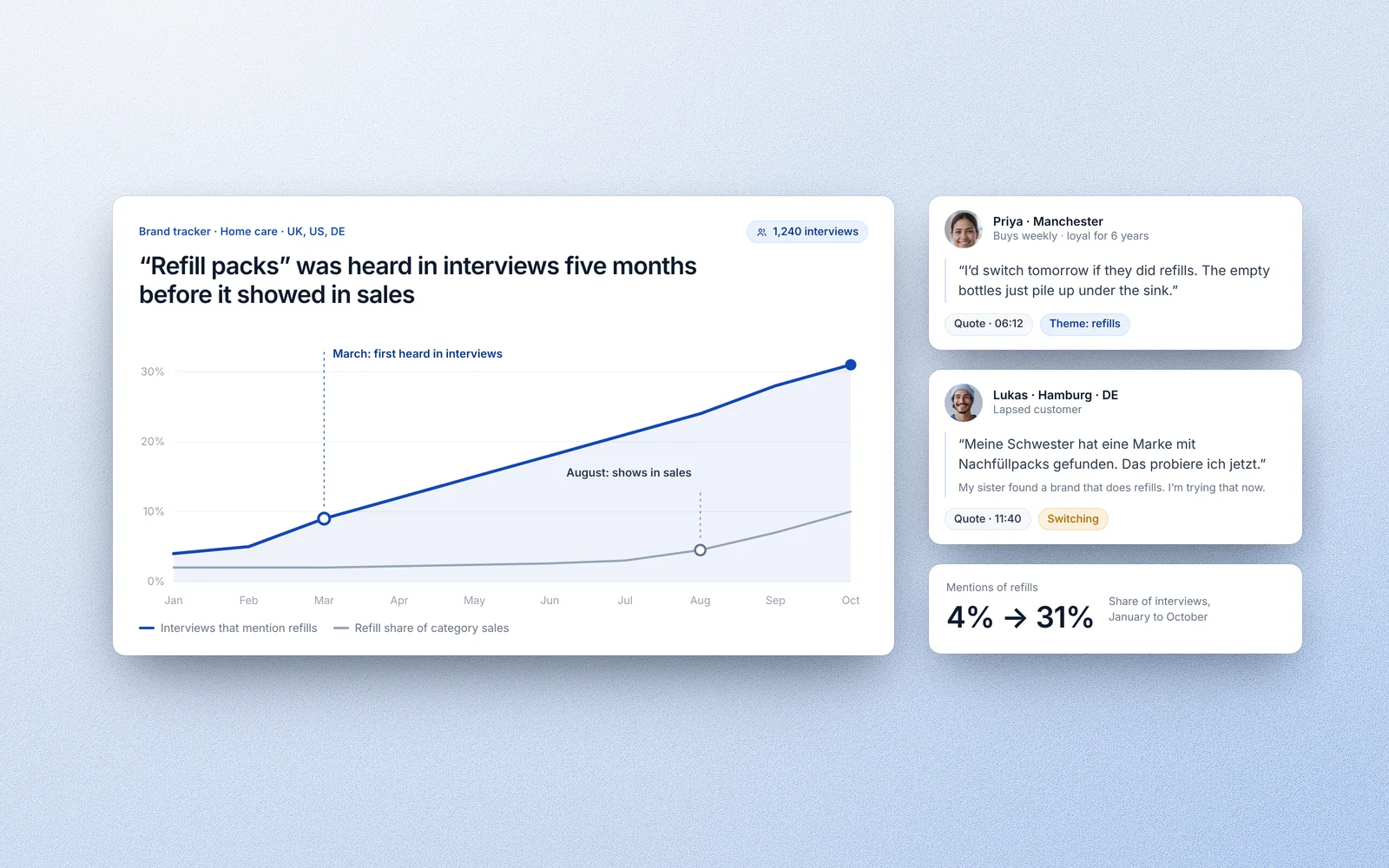
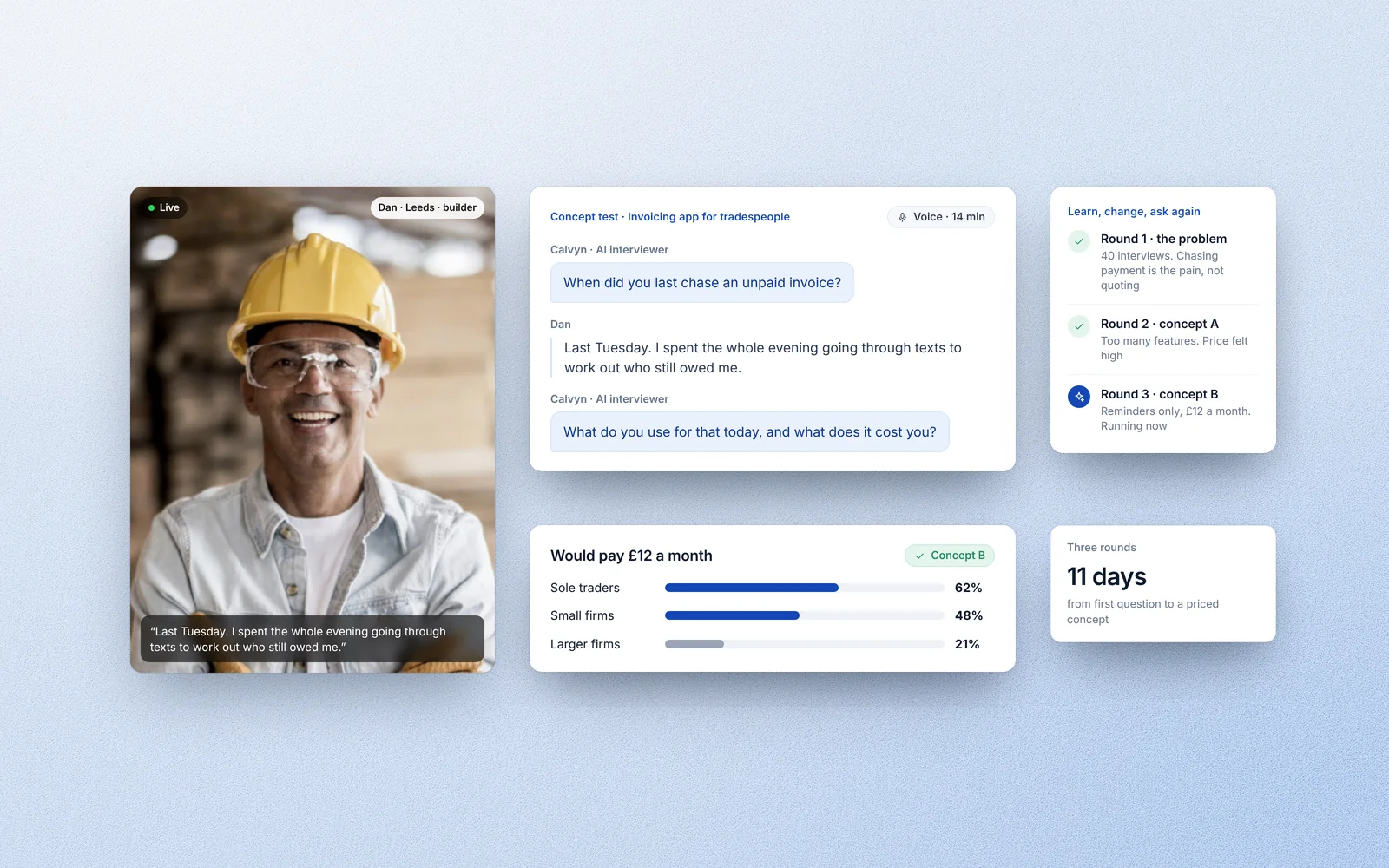
The numbers say what happened. Customers say what happens next.
A data room records decisions customers have already made. The investment case rests on the ones they haven’t made yet. Here is how deal teams can hear those decisions before they sign.
Every data room tells a story about the past. Revenue by cohort, net retention, pipeline conversion, price realisation: each number adds up decisions that customers made months or years ago. The investment case, though, is a bet on decisions they haven’t made yet. Will they renew after the next price rise? Are they quietly trialling a cheaper rival? Would they buy the product the business plan says is coming next?
Those answers don’t sit in a spreadsheet. They sit with customers, lost prospects, channel partners and the people who work in the business. In most deals, too few of them are asked.
Diligence that confirms instead of tests
Bain & Company’s work on M&A puts the cost plainly. Even as diligence practice has improved, about half of deals larger than $250 million fail to deliver the promised returns. Only one in three business development executives Bain surveyed said they were satisfied with how their companies manage diligence.1 Bain’s diagnosis is that too many executives treat diligence as an audit to confirm what they think they know.
Customer work is where that confirmation bias does the most damage. The classic programme is a handful of reference calls, often with customers the management team put forward. Those people are real and their views are sincere, but they were chosen because they are happy. A programme built on them will rarely find the renewal at risk, the competitor on the shortlist, or the segment where price rises have already started to bite.
A data room tells you what customers did. Diligence should tell you what they will do next.
What only customers can tell you
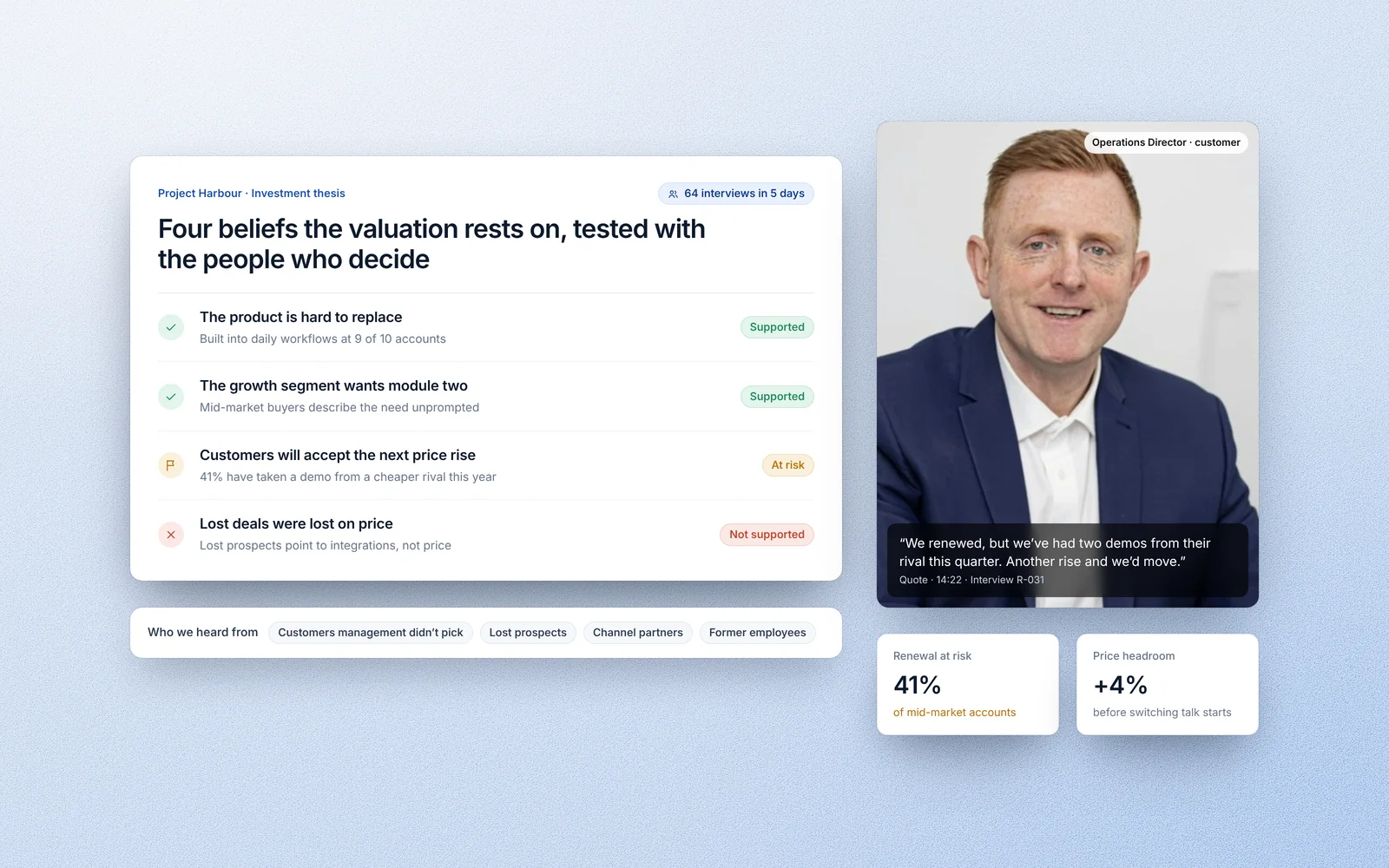
The numbers can show that retention is holding. Only customers can say whether it will. The signals that matter are almost always about what comes next:
- Switching intent. Who has looked at alternatives in the last year, and what stopped them moving.
- Price headroom. How the last price rise landed, and what would make the next one too far.
- Why deals are lost. Prospects who chose a rival will say things the sales team never hears.
- Dependency. How deeply the product sits in daily work, and what it would take to replace it.
- The next product. Whether the growth plan matches a need customers actually describe.
None of this is exotic. It goes unasked because conversations are slow to arrange and expensive to run, so deal teams ration them.
The sell side has the same problem, earlier
Vendor due diligence moves the work to before the sale. PwC describes the benefits as control over timing and process, added credibility for the sales memorandum, and the chance to find and fix value-critical issues before a buyer finds them.2 Customer evidence is the part of a vendor pack that buyers trust least when it is thin. An equity story that shows what customers, employees and experts say, unprompted, answers the buyer’s first questions before they are asked.
A better brief for customer diligence
Whichever side of the table you sit on, five changes make the work sharper:
- Write down what must be true. List the three or four beliefs the valuation rests on, then design questions that could prove each one wrong.
- Talk to the customers nobody picked. Include lost deals, churned accounts, the smallest and the largest, and the segment the plan depends on.
- Ask about the past, not intentions. “What happened at your last renewal?” is more reliable than “Will you renew?”
- Separate users from buyers. The person who loves the product is often not the person who signs the contract.
- Keep the voice. Every claim in the investment committee paper should trace back to something a person said.
Where Calvyn fits
The financials will always matter. But they describe the business that was. The customers describe the one you are buying.