Before you build it, ask them
Most new products don’t fail because the team couldn’t build them. They fail because not enough people needed them. A few honest conversations are the cheapest insurance a founder or product team can buy.
Starting something is hard to survive. Of the US businesses that opened in the year to March 2014, about 80 per cent were still trading a year later. Only half reached five years, and about a third made it to ten.1
When start-ups do close, the stated reason is usually money. CB Insights analysed 431 venture-backed companies that shut down from 2023 onwards and found that 70 per cent ran out of capital. It calls that almost always the final cause of death, not the root problem. Poor product-market fit was cited in 43 per cent of cases, bad timing in 29 per cent and unsustainable unit economics in 19 per cent.2 Cash runs out because customers don’t turn up in the numbers the plan assumed.
The cheapest prototype is a question.
The insight is usually in the room
In its early days Airbnb’s revenue was flat at about $200 a week. The founders flew to New York and spent time with the hosts listing their homes. The idea wasn’t the problem. The photos were. They rented a camera and re-shot the listings. A week later, weekly revenue had doubled to $400, the first improvement the company had seen in more than eight months.3
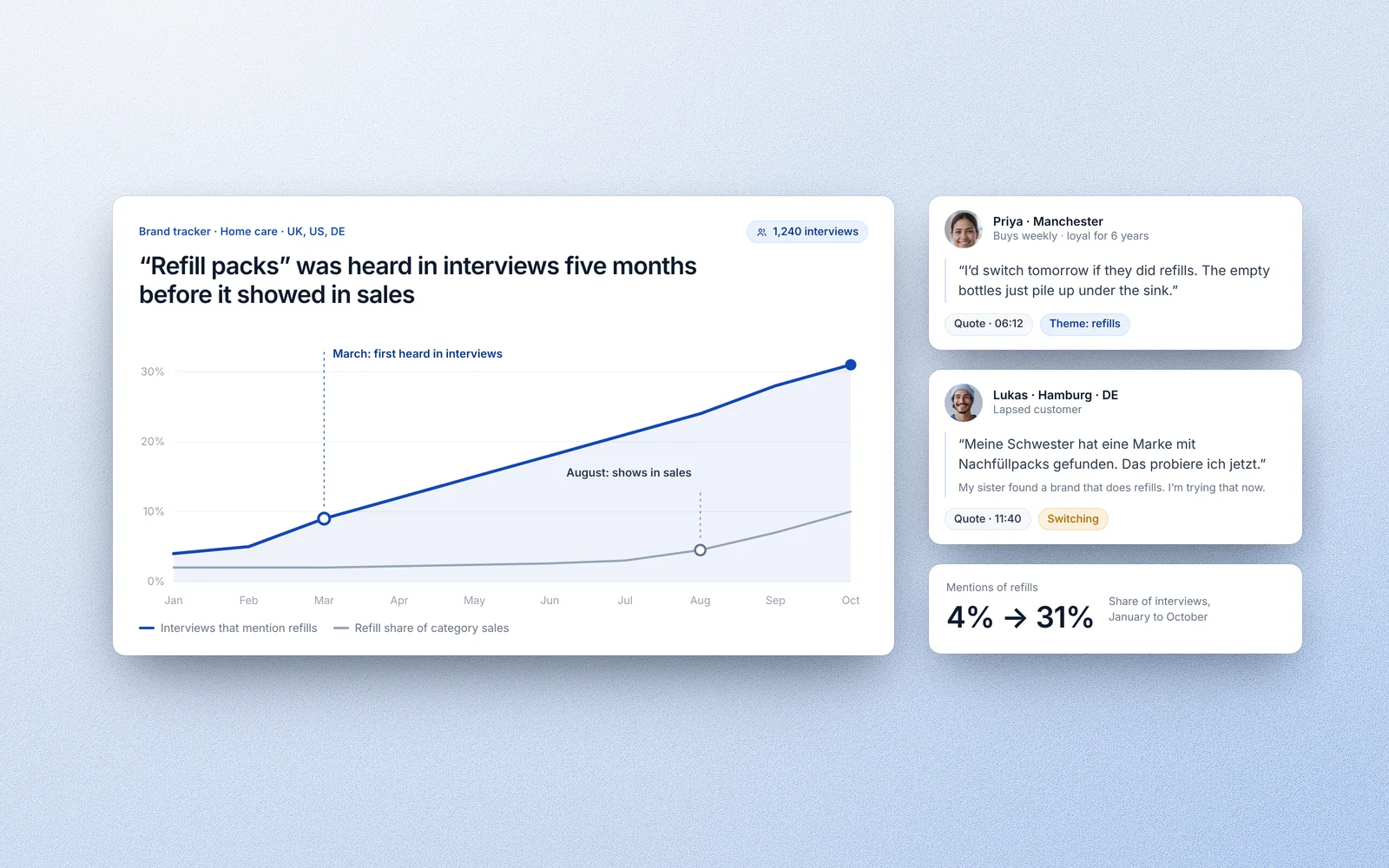
No dashboard would have told them. They had to go, look and ask.
How to ask without fooling yourself
Customer conversations go wrong in predictable ways. People are polite, they enjoy talking about the future, and they tell you what you want to hear. A few rules keep the conversation honest:
- Ask about the last time, not the next time. “When did this last happen? What did you do? What did it cost?” is evidence. “Would you use this?” is a compliment.
- Don’t pitch. The moment you describe your solution, you are selling, and people stop telling you about their problem.
- Look for money and effort already spent. Spreadsheets, workarounds and paid stopgaps mean the need is real.
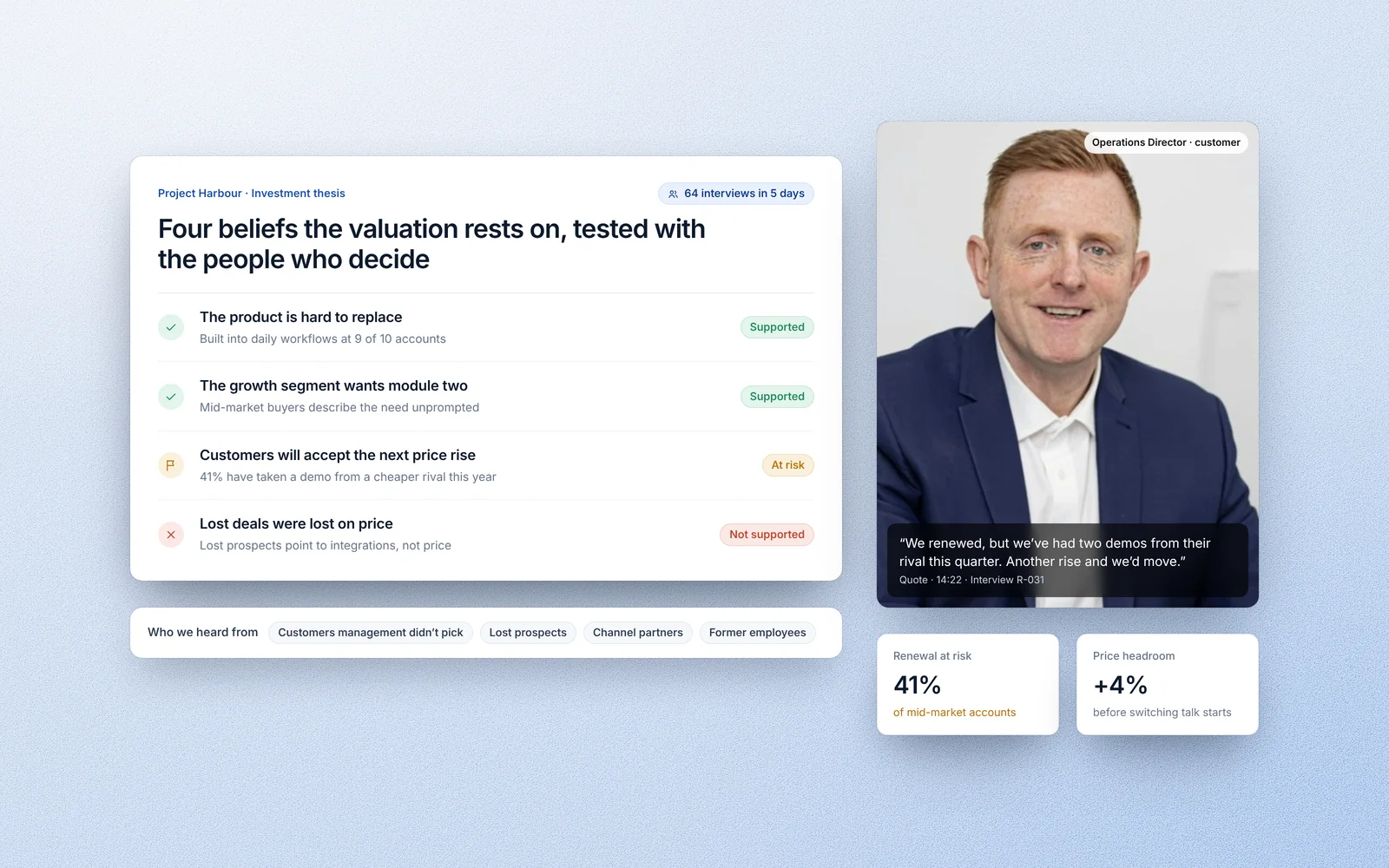
- Talk to the people who said no. The prospects who walked away know exactly what is missing.
- Count patterns, not anecdotes. One keen customer is a story. The same frustration in twelve conversations is a market.
How many people do you need?
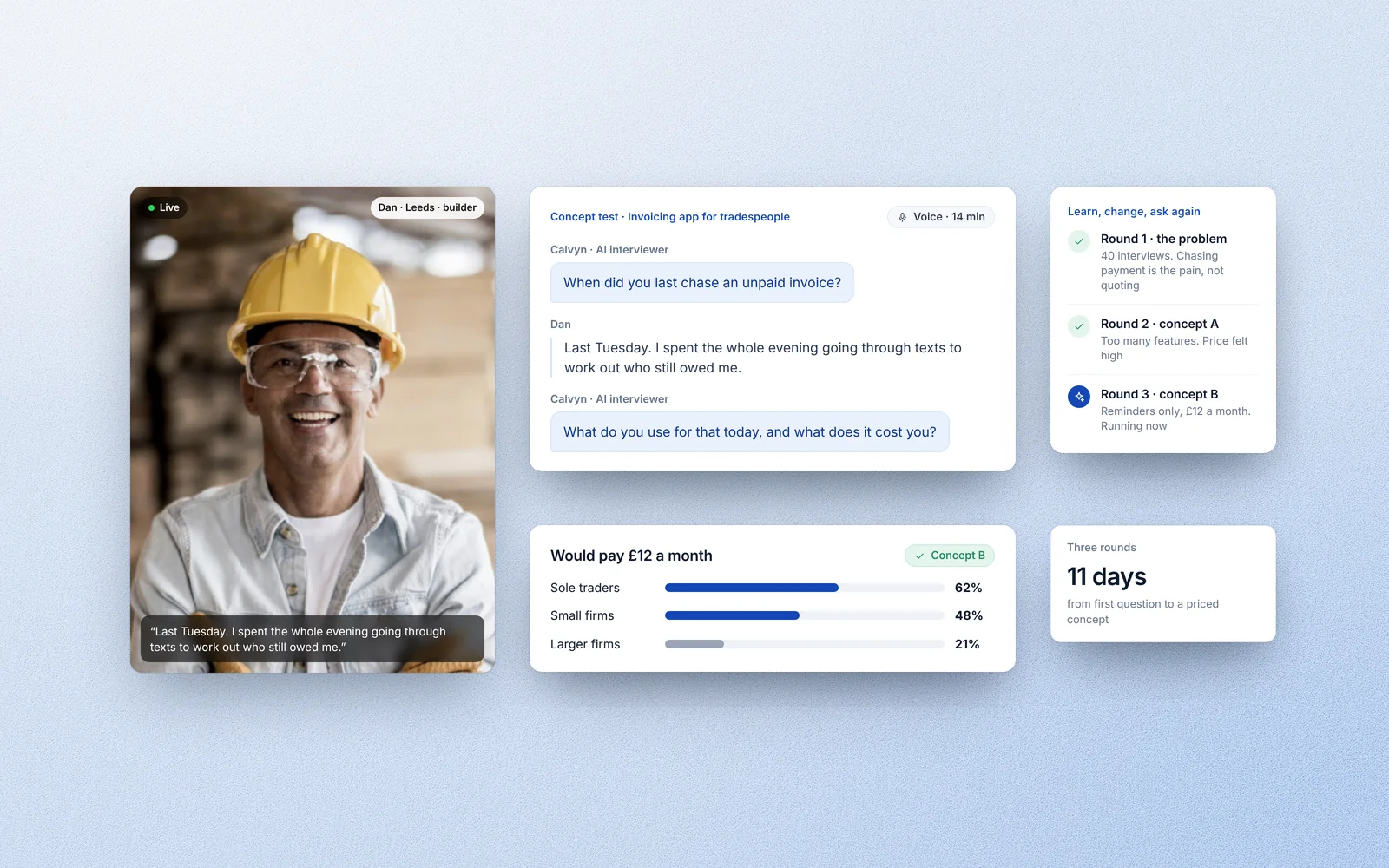
For some questions, fewer than you think. Jakob Nielsen’s widely used rule of thumb is that testing with five users uncovers about 85 per cent of usability problems, and that several small rounds, with fixes in between, beat one large study.4 That is the right model for learning: ask, change, ask again.
Demand is different. Whether people will pay, which segment wants it most and what price feels fair are questions where five voices can mislead. They need enough conversations in each segment to see a pattern, and some numbers alongside the reasons.
Your own team is a market too
The same rules apply inside a business. Gallup reports that global employee engagement fell to 20 per cent in 2025, down from a peak of 23 per cent in 2022, and estimates that low engagement costs the world economy about $10 trillion in lost productivity, or 9 per cent of GDP.5 An annual engagement survey tells leaders the score. It rarely tells them why, or what would change it. Honest, confidential conversations with employees, and with people who have just left, do.
Where Calvyn fits
Building is expensive. Asking isn’t. The teams that win usually ask first, and keep asking.
Sources
- US Bureau of Labor Statistics, Business Employment Dynamics: survival of private sector establishments by opening year
- CB Insights, “The top reasons startups fail” (2026)
- First Round Review, “How design thinking transformed Airbnb from a failing startup to a billion dollar business”
- Nielsen Norman Group, “Why you only need to test with 5 users” (Jakob Nielsen, 2000)
- Gallup, “State of the Global Workplace”